
This guide explains what a SIP trunk is, how it works, and how it can benefit your business. Understanding SIP trunking is key to modernising your business communications.
What is a SIP Trunk?
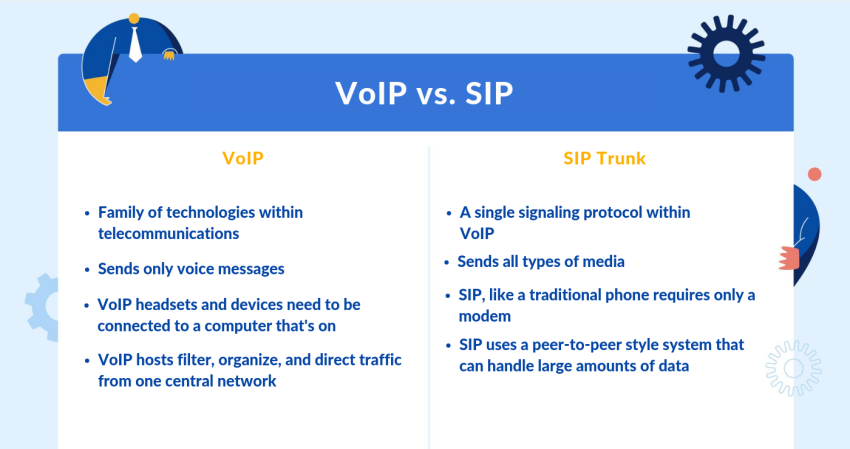
A SIP (Session Initiation Protocol) trunk is a virtual phone line that operates over your internet connection. It replaces traditional physical phone lines, allowing you to make and receive calls using a VoIP (Voice over IP) phone system.
Think of it as a digital pipeline that connects your business’s phone system to the public telephone network.
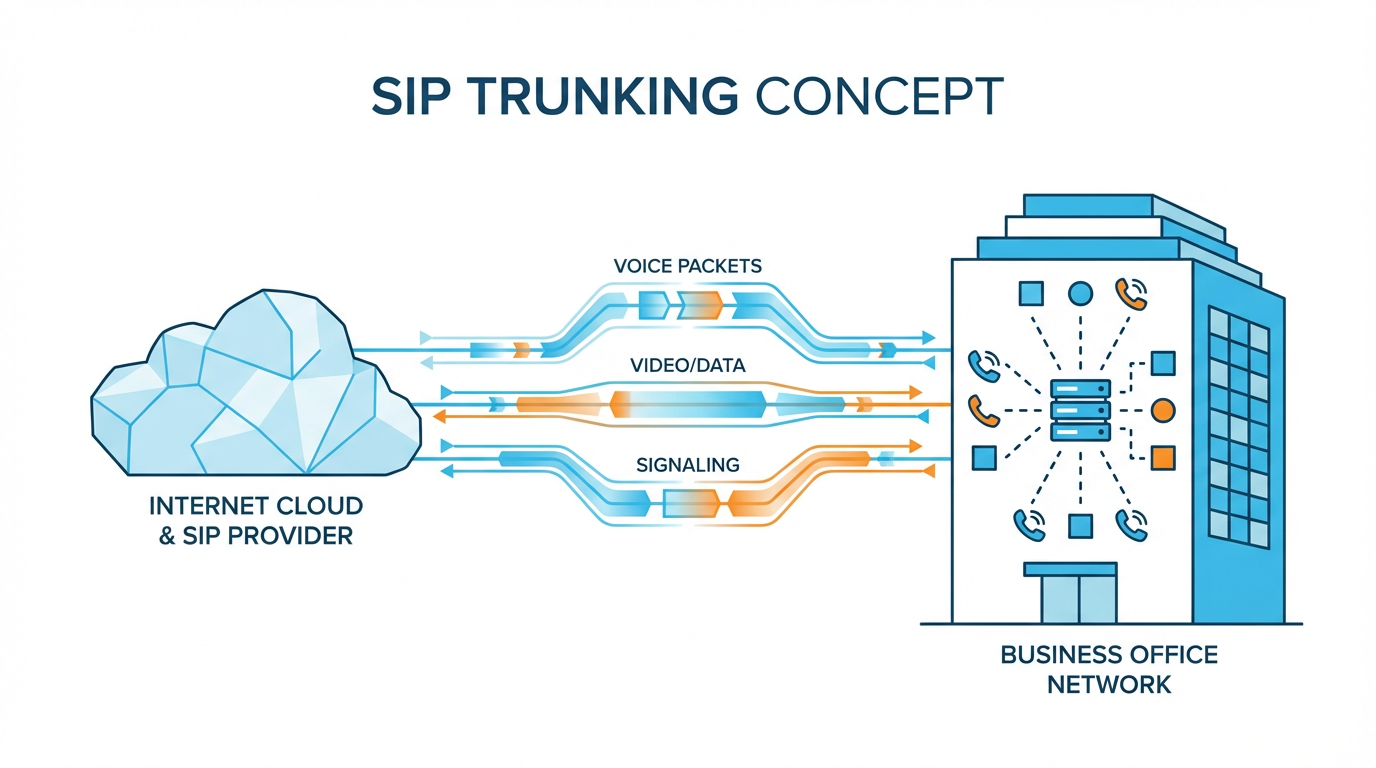
How Does SIP Trunking Work?
SIP trunking converts your voice calls into data packets and sends them over the internet. Here’s a simplified breakdown of the process:
1. You make a call from your IP phone.
2. Your phone system (PBX) sends the call to your SIP trunk provider over the internet.
3. The SIP trunk provider connects the call to the traditional phone network (PSTN).
This all happens in an instant, providing a seamless calling experience.
SIP Trunking vs. Traditional Phone Lines
SIP trunking offers several advantages over traditional phone lines like ISDN or PSTN.
| Feature | SIP Trunking | Traditional Phone Lines |
| Connection | Internet | Physical copper wires |
| Scalability | Easily add or remove lines | Requires physical installation |
| Cost | Lower monthly fees and call rates | Higher line rental and call costs |
| Flexibility | Keep your number when you move | Tied to a physical location |
Benefits of SIP Trunking
• Cost Savings: Reduce your phone bills with lower line rental and call costs.
• Scalability: Easily scale your phone lines up or down as your business needs change.
• Reliability: Enjoy crystal-clear call quality and business continuity features.
• Flexibility: Keep your existing phone numbers and add new ones from any geographic location.
If you’re interested in learning more about how SIP trunking can benefit your business, contact the Comm Centre team today.
This document is for informational purposes only. For detailed technical specifications, please consult with a Comm Centre representative.

